

- This event has passed.
SESA Talks: Applying AI beyond ChatGPT in engineering
21 Viaduct Harbour Avenue
Date: Thursday, 11 November 2025
Time: 10:00 AM
AOSEC – Asia Oceania Systems Engineering Conference, has become a series of well-established international conference on Systems Engineering in Asia Oceania Region.
AOSEC 2025 marks the 15th edition of the conference series, and will be held in Singapore, on 27-29 October.
The main events for the conference are going to be on 27th, 28th and 29th October, with tutorials and INCOSE business meetings on 26th October.
AOSEC 2025 Conference Committee invites academicians, researchers and industry practitioners to actively participate in the conference and leverage this opportunity to exchange ideas, information and opinions, share their research findings and experiences in systems engineering.
Hybrid Event – 31 January, 1-3 February 2026
Torrance Marriott Redondo Beach
3635 Fashion Way
Torrance, California 90503 – USA
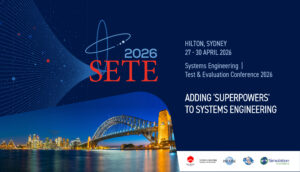
Adding ‘Superpowers’ to Systems Engineering
Discover how integrating Artificial Intelligence and Data Engineering into Systems Engineering enhances system design, management, and optimisation. The conference showcases advances in system modelling, automation of tasks, test & evaluation, and agile practices, driving the more efficient and resilient delivery of safe, secure, and sustainable systems within tighter timeframes.
The disciplines of systems engineering and test and evaluation — strengthened by the rapid adoption of artificial intelligence, digital engineering, automation, and data-driven approaches — are uniquely positioned to shape the design, integration, delivery, and sustainment of safe, secure, and resilient complex systems, enabling faster, smarter, and more sustainable outcomes for national and global benefit.
SETE26 will also explore how Artificial Intelligence and data engineering not only improve but also revolutionary shift the ability for Systems Engineers to analyses massive datasets and identify patterns invisible to the human eye, enabling more informed decision-making and efficient processes. Furthermore, these new technologies will enable systems to perform functions requiring human intelligence, leading to a significant transformation of how Systems will be engineered across all domains: Defence, Healthcare, Energy, Infrastructure and Transport.
This year’s SETE Conference is to be held at the Hilton Sydney from 27-30 April 2026.
Submissions for Abstracts, Papers and Tutorial submissions are open now! For more details, key dates and for how to apply visit the Authors page of the SETE website.
Please visit the SETE website for more information. For sponsorship, please download the prospectus here.
The INCOSE International Symposium is the premier international forum where practitioners, researchers, and educators share their insights, experiences, and innovations, furthering the practice of systems engineering. The symposium has occurred every year since 1991 and is the largest annual gathering of the systems engineering community.

Beyond Digital Engineering: Seeking Wa in SE
While Digital Engineering (DE) continues to be a driving force in developing complex systems, today’s societal challenges demand a more profound leap forward. The 2026 symposium will center on harmonizing emerging technologies with the irreplaceable power of human creativity and Kansei (sensibility), all guided by Wa, the Japanese concept of harmony.
How can Human Systems Integration (HSI) forge this essential synergy and effectively blend human ingenuity, Kansei, and advanced technologies like AI? What vital skills will systems engineers need to thrive in this new era of evolving DE? This focus on a human-centric, nature-harmonized approach will illuminate the path for systems engineering to not just adapt, but to lead the shaping of our future world.
4.30 pm — 5:30 pm AWST, 03 September 2025
Overview
Enhancing reliability and performance through rigorous testing in complex engineering systems.
System testing is essential for validating the functionality, safety, and performance of complex engineering systems before deployment. This presentation will explore the full lifecycle of system testing—from planning and execution to verification and validation—across diverse domains such as industrial automation, Railway systems software integration. Attendees will gain practical insights into international standards, structured testing hierarchies, and both black-box and white-box methodologies. The session will also cover cybersecurity, performance testing, and acceptance criteria, equipping participants with the tools and frameworks needed to deliver robust, compliant, and high-performing systems.
Learning outcomes
In this presentation, you will learn:
- how a system test methodology is chosen for different applications
- know how to apply testing techniques
- recognize International standards governing system testing
- sample tests and case study of system tests in modern railway systems.
Program
https://www.engineersaustralia.org.au/event/2022/05/system-testing-strategies-complex-engineering-environments-ensuring-quality-safety
Online
- 6.30 pm AEST (4:30 AWST)- webinar commences
- 7.30 pm AEST (5:30AWST) – webinar concludes
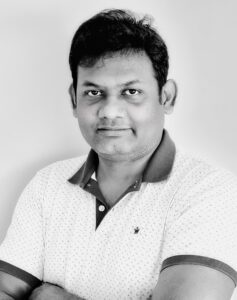
Debjyoti Dutta MIEAust, CPEng, NER, RPEQ;
Engineering Manager, Wabtec Corporation
Biography
Debjyoti is a Chartered Professional Engineer with 20 years of experience in, designing, testing and delivering technically complex railway signalling system Project. These include Heavy Rail, Metro, Light-Rail and High-Speed Rail Systems.
Debjyoti has had the privilege of working on major projects such as the CBTC driverless metro for Delhi Metro , RTP for BHP , Perth Metronet project, Eglinton Light rail.
Join us in a journey of exploration and innovation at our Australasian Simulation Congress (ASC 2025) where leading-edge technology converges with real-world applications to shape the future.
Discover, learn, connect and share with our national and international industry pioneers and experts from Health, Education, Defence, Engineering, Emergency Services, Transport, Aerospace, Serious Games and more to push the boundaries of possibility, inspire creativity and ignite a transformative journey through the power simulation.
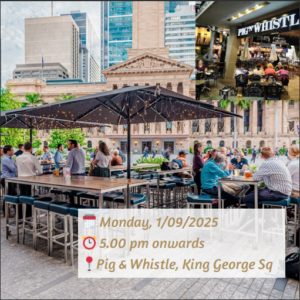
Join us Monday evening, September 1st, for a casual catch-up. It’s the perfect opportunity for SESA professionals in Brisbane to connect, share ideas and kick off the week right.
No need to RSVP, just come as you are!
🗓️ Date: Monday, 01/09/2025
⏰ Time: 5.00 pm onwards
📍 Location: Pig & Whistle, King George Sq, 100 Adelaide St
https://maps.app.goo.gl/LEAo1Z6hFPugoHdAA
Overview
Autonomous systems are rapidly reshaping industries; from defence and aerospace to rail, logistics, energy, and healthcare. But how do we verify, validate, and trust systems that make decisions independently?
Join us for a dynamic panel discussion which will explore the practical challenges of test and evaluation (T&E) in autonomous systems.
Through a systems engineering lens, our panelists will unpack:
- How autonomy is implemented in real-world systems across sectors
- The challenges and strategies in planning, conducting, and assuring credible T&E for autonomous systems
- The future outlook for verification and validation of autonomous systems
Whether you work directly with autonomous platforms or are simply autonomous systems-curious, this session will offer insights and cautionary tales to apply in your own engineering contexts.
Learning Outcomes:
By attending this session, participants will:
- Discover how autonomous systems are currently deployed across industries
- Understand key challenges in testing and evaluating autonomous technologies
- Learn strategies to manage uncertainty in autonomous system operations
- Gain insights into the evolving mindset and skills needed for future autonomy assurance.
Program Outline:
Online
5.30 pm AEST – Presentation begins
6.30 pm AEST – Presentation concludes
In-Person
5.00 pm AEST – Guest arrival & networking
5.30 pm AEST – Presentation begins
6.30 pm AEST – Presentation concludes networking and light catering
7:00 pm AEST – Event concludes
Speakers
Benjamin Harvey
Instructor – Uncrewed Systems, Deputy Maintenance Controller, Senior Remote Pilot
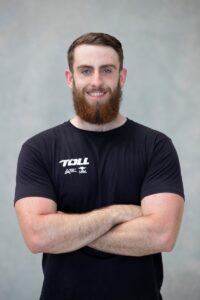 Ben is an experienced Unmanned Aerial Vehicle (UAV) pilot and instructor. He presently works with Toll Aviation, where he leverages UAV technology to solve real-world challenges for both civilian and defence aviation customers, with a particular focus on enterprise drone operations, technical integration, and training.
He has contributed to several projects from concept to completion, including active involvement in Beyond Visual Line of Sight (BVLOS) operational development, where he provided practical test data, operational feedback, and risk assessments to support approvals processes. He has also overseen improvements in operational compliance, helping reduce breaches against aviation safety and organisational standards through training, standardisation, and technical oversight.
Ben has many years of experience leading UAV training exercises for clients across defence, mining, energy, construction, agriculture, and forestry. His training has included scenario-based drills and real-world simulation activities, ensuring clients are prepared for operational demands while improving safety, efficiency, and mission success rates.
Previously, Ben was a Ground Support Operator at Wing, where he managed a fleet of 100+ drones for delivery operations. He supported more than 2,000 deliveries per week across Logan City Council, ensuring operational safety, regulatory compliance, and fleet readiness in one of the world’s first large-scale drone delivery services. Ben is currently completing a Bachelor of Engineering (Honours) in Electronic & UAV Engineering at Griffith University.
Adam Henrichs
Director of Advanced Development at Rheinmetall Defence Australia
 Adam Henrichs is a defence technology leader with deep expertise in command, control, communications, computers and intelligence (C4I) systems, advanced development, and autonomous capabilities. He is currently Director of Advanced Development at Rheinmetall Defence Australia, where he leads innovation and capability exploration across emerging technologies.
Adam brings more than a decade of experience spanning systems engineering, architecture, and integration roles within both industry and defence programs. At Rheinmetall, he has served as C4ISREW System Architect and C4I Lead delivering next-generation capabilities. He has also contributed as a C4I Engineering Consultant across major programs including LAND 400 and AIR 6500, and previously held senior engineering and integration roles at Boeing Defence Australia, working on JP2072 and other critical defence communications projects.
With a Bachelor of Aerospace Engineering from QUT, Adam combines strong technical foundations with strategic insight into complex, networked defence environments. His career has consistently focused on delivering mission-ready solutions that enhance operational effectiveness, from systems integration to advanced concept development.

A live demonstration will showcase the AM workflow. From preparing a model in slicing software to printing an “impossible geometry” part achievable only with AM. While the print progresses, discussion will open on key challenges including certification, deployment, and the logistical trade-offs of adopting AM. Participants will also gain insight into AM’s role within systems engineering—shaping policy, guiding capability development, and enabling mission adaptability.
Registration is required for attendance.
About the speaker

In-person
4:30 pm AEDT– Networking & refreshments for In-Person attendees
5:00 pm AEDT– Event starts
5:05 pm AEDT– Introduction to SESA and Branch launch by SESA President
5:15 pm AEDT– Presentation by Daniel Eggler
6:00 pm AEDT– Q&A
6:30 pm AEDT– End
Online
5:00 pm AEDT– Webinar starts
5:05 pm AEDT– Introduction to SESA and Branch launch by SESA President
5:15 pm AEDT– Presentation by Daniel Eggler
6:00 pm AEDT– Q&A
6:30 pm AEDT– End

🎉 End-of-Year Celebration – SESA Victoria Branch
Date: 11 Dec 25
Time: 17:30-19:00
Location: The Mitre Tavern, Melbourne (table booked at the end of the alley)
—
Event Overview
Join the Systems Engineering Society of Australia (SESA) Victoria Branch as we celebrate the end of 2025! This is a chance to reflect on the year that’s passed and look ahead to an exciting 2026.
We’re keeping it casual – come along for a relaxed drink, good conversation, and the opportunity to reconnect with colleagues and friends in the systems engineering community.
—
Why Attend?
– 🍻 Enjoy a social evening with fellow members
– 🔎 Reflect on achievements from 2025
– 🚀 Look forward to opportunities in 2026
– 🤝 Strengthen connections within the Victorian systems engineering community
—
RSVP
No formal RSVP required – just drop by and join us!
—
Hosted by:
Tom Castor
Chair – SESA Victoria Branch Committee
Overview
Many engineers have experimented with tools such as ChatGPT or Microsoft Copilot, yet these represent only a small part of the rapidly evolving AI ecosystem. This session moves beyond general-purpose chat tools to provide a clear, practical introduction to AI capabilities that can be integrated into everyday engineering workflows. In this session, the presenter will demystify commonly used terms such as agents, MCP, A2A and RAG, helping engineers build confidence in understanding and evaluating emerging AI technologies relevant to professional practice.
Through interactive polls and live demonstrations, the session will showcase practical platforms including visual workflow automation tools, AI agent frameworks and local, private AI solutions suitable for sensitive or regulated environments. Attendees will see how these tools can support repeatable engineering tasks such as document handling, standards checking and cross-system integration. The session provides participants with a realistic view of what is achievable today and a structured roadmap for exploring AI safely, responsibly and effectively within their own engineering context.
Program timeline
Online
- 6.30 pm AEDT – Presentation commences
- 7.30 pm AEDT – Presentation concludes
(If you are joining from Queensland, please join at 5.30pm AEST)
In-person
- 5.00 pm AEST – Registration opens
- 5.30 pm AEST – Presentation commences
- 6.30 pm AEST – Presentation concludes. Networking and catering
- 7.00 pm AEST – Event concludes
Learning outcomes
- Interpret common AI terminology in plain language, enabling informed discussions and decisions about AI adoption in engineering practice.
- Identify AI tools beyond chat-based systems that are well suited to engineering workflows, including automation and agent-based solutions.
- Understand when and how local or private AI options can be applied for sensitive, regulated or air-gapped project environments.
- Develop a practical starting roadmap for experimenting with AI tools that improve efficiency while aligning with professional and organisational obligations.
About the speaker

Fabrice is a Director and founder of Allayze, a Systems Engineering and AI consultancy delivering innovative solutions for industry. He holds a Bachelor of Mechanical Engineering from RMIT and a Master of Systems Engineering from UNSW ADFA, with over ten years of experience across defence, railway, aerospace, and automotive sectors. Alongside his consulting work, he spends a lot of time figuring out how AI fits into serious engineering environments. Two years ago, he picked up his first AI tool out of curiosity. That curiosity quickly turned into something closer to obsession. He built a Hazard Log after getting fed up with Excel spreadsheets, wondering what if AI could help identify hazards he might have missed. That side project opened his eyes to what becomes possible when you combine engineering discipline with these new tools. Now, alongside two business partners, he’s building a Multi Agent Systems Engineering Platform aimed at the document-heavy, standards-driven work that engineers deal with daily. The idea is straightforward: less time on tedious tasks, more time on actual engineering. Outside of that, Fabrice shares what he’s learned with engineers and teams trying to work out where these tools fit. His view is simple: get your hands dirty, break things, and figure it out as you go.